Long form vs short form birth certificate documents serve different purposes based on what information they include and how government agencies accept them. The long form contains every detail recorded at birth, while the short form gives only basic facts. Knowing which version you need saves time and avoids delays when applying for passports, licenses, or legal services.
What Is a Long Form Birth Certificate?
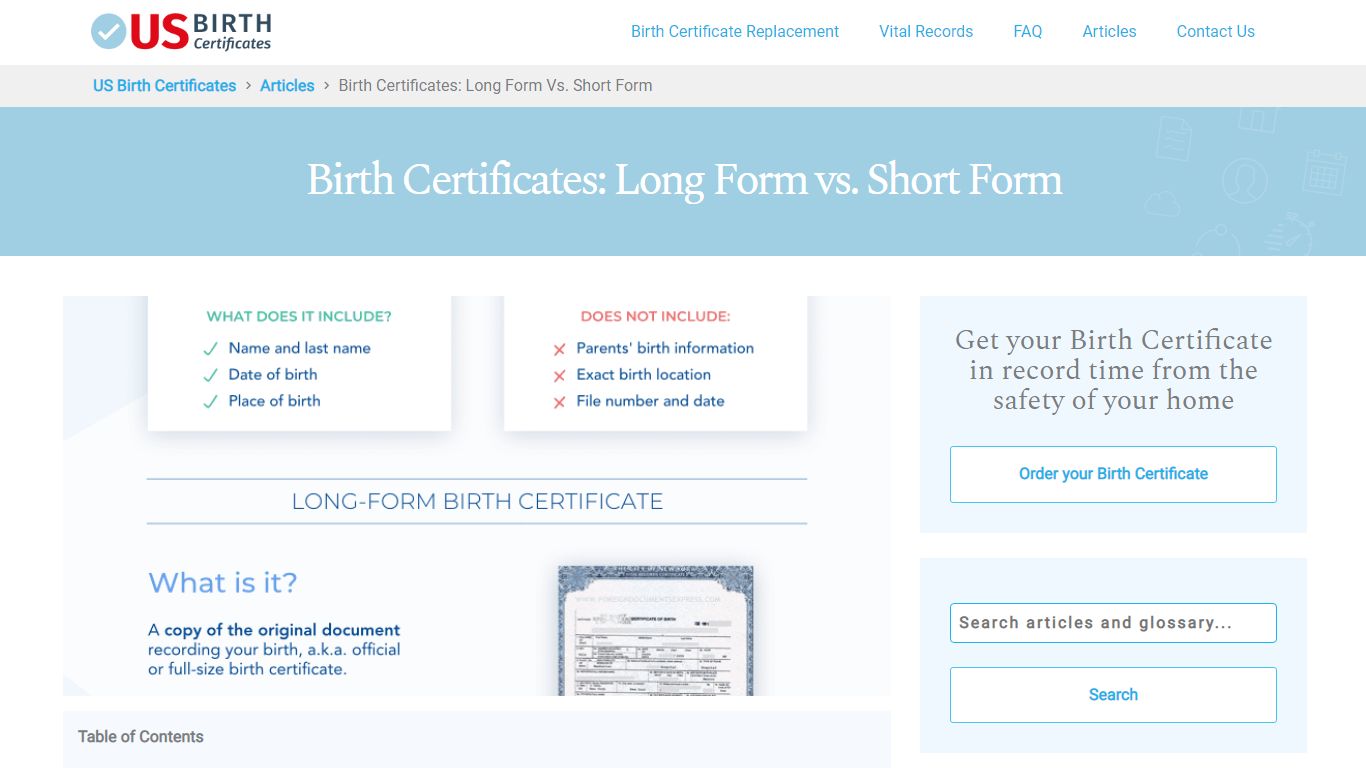
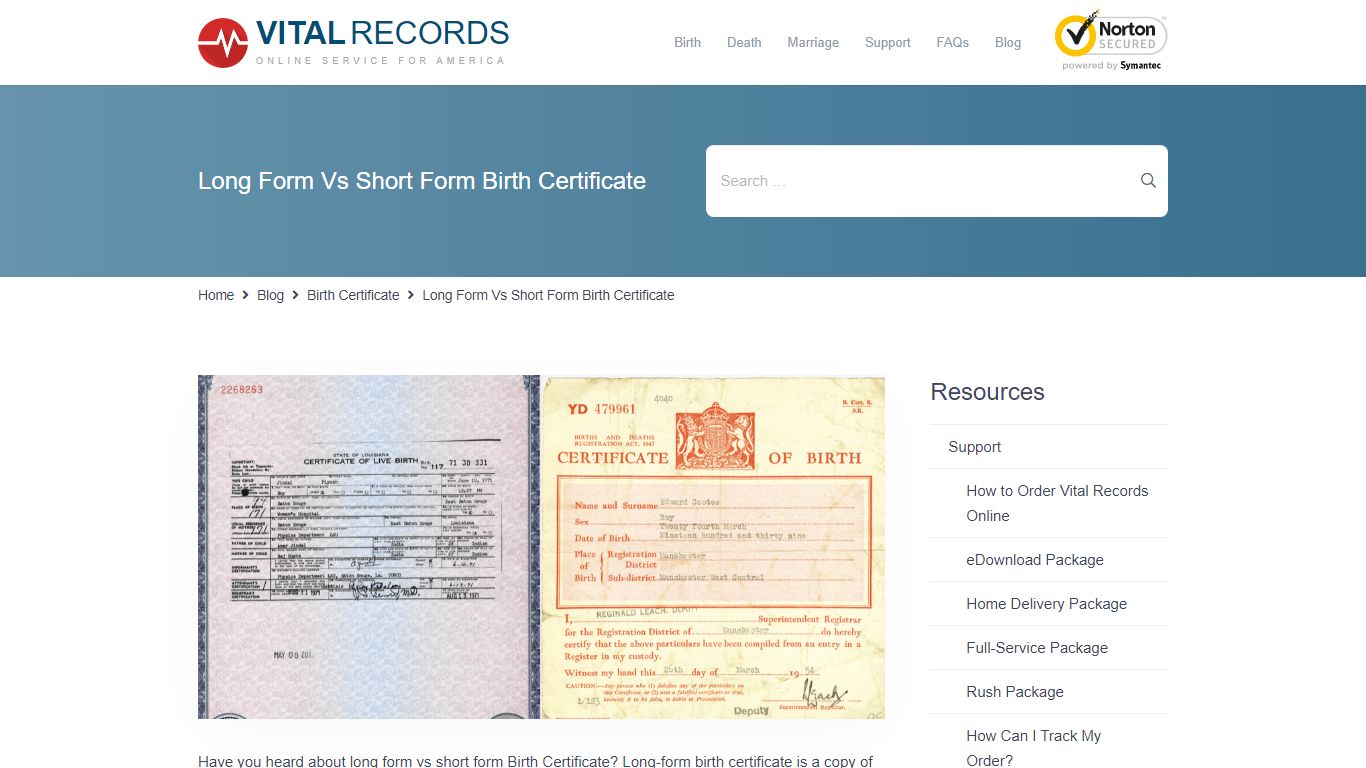
A long form birth certificate is a certified copy of the original record filed with the state’s vital statistics office. It includes all details entered at the time of birth, such as the attending physician’s full name, license number, and signature. It also lists both parents’ legal names, dates and places of birth, citizenship status, mother’s maiden name, father’s occupation, hospital registration unit, birth unit number, infant’s sex, weight, length, and exact time of delivery. This version often shows any corrections made later, like amended parental names or updated gender markers.
States issue long forms on standard 8.5 × 11-inch paper. Agencies require this version for U.S. passport applications, driver’s licenses, dual citizenship claims, adoption proceedings, court filings, and marriage licenses. Only the vital records office in the state where the birth occurred can provide a certified long form copy.
What Is a Short Form Birth Certificate?
A short form birth certificate is a notarized abstract that confirms the existence of the original record. It shows only the child’s name, date of birth, and municipality of birth. This version omits parental identifiers, medical staff signatures, licensing numbers, filing dates, and other metadata. Because it lacks key details, it cannot be used for federal programs or official identification.
Each state defines its own short form content, but all versions consistently exclude the state-assigned file number and exact filing date. People obtain short forms for genealogical research, internal agency reference, or when minimal proof of birth is sufficient. It is not accepted for passports, licenses, or legal transactions requiring full documentation.
Key Differences Between Long Form and Short Form
The main difference lies in completeness. Long forms reproduce the entire original entry, including signatures, file numbers, and filing dates. Short forms summarize only essential identifiers. Long forms are required for legal and government use; short forms are for informal verification.
| Feature | Long Form | Short Form |
|---|---|---|
| Child’s full name | Yes | Yes |
| Date and place of birth | Yes | Yes |
| Parents’ names and birth details | Yes | No |
| Attending physician/midwife info | Yes | No |
| State file number | Yes | No |
| Filing date | Yes | No |
| Accepted for passport | Yes | No |
| Accepted for driver’s license | Yes | No |
When Do You Need a Long Form Birth Certificate?
You need a long form birth certificate for any official transaction that requires full verification of identity and parentage. This includes applying for a U.S. passport, obtaining a driver’s license in most states, claiming dual citizenship, filing court documents, completing adoption paperwork, or getting married. Federal agencies and state governments only accept the long form because it contains the file number and filing date needed to confirm the record’s authenticity.
If you were born in the U.S. but live abroad, you may still need a long form to prove citizenship for visa or immigration purposes. Schools, employers, and banks rarely require it unless there’s a legal or regulatory reason. Always check with the requesting agency before ordering a copy.
When Is a Short Form Birth Certificate Enough?
A short form works when you only need to confirm basic birth facts. Genealogists use it to trace family history. Some schools or employers may accept it for enrollment or background checks if they don’t require full legal proof. It’s also useful for personal records or when sharing birth info with relatives.
However, never use a short form for government applications. Passport offices, DMVs, and courts will reject it. If you’re unsure, ask the agency which version they accept. In most cases, they’ll specify “certified long form” or “full-size birth certificate.”
State Variations in Birth Certificate Content
Each state controls what appears on its birth certificates. While long forms generally include the same core data, some states add extra fields like mother’s prenatal care provider or birth order. Texas, for example, shows historical corrections such as name changes or gender marker updates on the long form. Missouri provides both versions clearly labeled as “long form” and “short form abstract.”
Short forms vary more widely. Some states list only name, date, and city; others may include county or hospital name. Always verify your state’s requirements before submitting a certificate for official use.
How to Get a Certified Long Form Birth Certificate
Only the vital records office in the state where you were born can issue a certified long form. You cannot get one from hospitals, clinics, or third-party websites. Most states allow online, mail, or in-person requests. You’ll need to provide valid ID, proof of relationship (if requesting for someone else), and pay a fee.
Processing times range from a few days to several weeks. Expedited service may be available for an extra cost. Some states offer electronic delivery for faster access. Keep your receipt—it serves as temporary proof while you wait.
Common Misconceptions About Birth Certificates
Many people think both forms are equally valid. That’s not true. Only the long form is legally recognized for official use. Others believe hospitals issue birth certificates—actually, they only report births to the state. Still others assume short forms work for passports—they don’t.
Another myth is that long forms are “more accurate.” Both versions reflect the same original record, but the long form includes more data. Accuracy depends on correct reporting at birth, not the certificate type.
Why the File Number and Filing Date Matter
The state-assigned file number and exact filing date are critical for verifying a birth record’s legitimacy. Federal agencies use these to cross-check against the original database. Short forms omit them, making verification impossible. Without these details, your application may be delayed or denied.
This is why U.S. passport applications specifically require a long form. The Department of State won’t accept abstracts or summaries. The same rule applies to Social Security updates and immigration filings.
Cost and Processing Time by State
Fees for certified birth certificates range from $10 to $30 per copy. Processing times vary: some states fulfill requests in 3–5 business days, others take 4–6 weeks. Expedited options cost extra but can reduce wait time to 1–2 days.
Always check your state’s vital records website for current fees and timelines. Out-of-state requests may take longer due to mail delays. Some states charge more for non-residents.
What to Do If Your Birth Certificate Is Lost or Damaged
If your long form is lost, stolen, or damaged, request a replacement from the state where you were born. You don’t need the original to apply—just valid ID and proof of eligibility. Most states allow replacements indefinitely, even decades later.
Damaged certificates (e.g., water-stained or torn) should be replaced before use. Agencies may reject them if key details are unreadable. Submit a new request with a note explaining the damage.
International Use of U.S. Birth Certificates
For use outside the U.S., you may need an apostille or authentication from your state’s secretary of state. Some countries require translation into their official language. Always confirm requirements with the foreign embassy or consulate.
Long forms are almost always required for international adoption, visa applications, or dual citizenship. Short forms are not accepted abroad.
How to Verify a Birth Certificate’s Authenticity
Certified copies bear a raised seal, registrar’s signature, and watermark. Uncertified prints from online portals are not valid. To verify, contact the issuing state’s vital records office with the file number and filing date.
Be wary of fake sites offering “instant” certificates. Only government offices can issue legal copies. Third-party services can help with paperwork but cannot produce certified documents.
Frequently Asked Questions
People often ask which version they need, how to get one, and why agencies reject short forms. Below are detailed answers to the most common questions.
Can I use a short form birth certificate for a U.S. passport?
No. The U.S. Department of State requires a certified long form birth certificate for passport applications. Short forms lack the file number, filing date, and parental details needed to verify citizenship. Even if your short form includes a seal, it will be rejected. Always submit the full-size version when applying for a passport, whether first-time or renewal. If you only have a short form, request a long form from your birth state’s vital records office before starting your passport application.
Why do some states call it a “certificate of live birth” instead of long form?
Some states, like California and New York, use the term “Certificate of Live Birth” for what others call the long form. This is just a naming difference—the content and legal validity are the same. It still includes all original entries, signatures, and filing details. The key is whether it’s a certified copy from the vital records office, not the exact title. Always confirm with the requesting agency if they accept your state’s version.
Can I get a long form birth certificate if I was born abroad to U.S. parents?
Yes, but the process differs. If you were born overseas to U.S. citizen parents, your birth may be registered with the U.S. Department of State as a Consular Report of Birth Abroad (CRBA). This document serves as your proof of citizenship and is equivalent to a long form. You can request a copy from the State Department, not a state vital records office. For military births abroad, contact the National Personnel Records Center.
How long does it take to receive a certified long form birth certificate?
Processing times vary by state. Most fulfill standard requests within 5–15 business days. Expedited service can reduce this to 1–3 days for an additional fee. Mail delivery adds 3–7 days depending on location. Some states offer electronic delivery for faster access. Always check your state’s website for current timelines. During peak seasons (e.g., summer), delays may occur.
Is a hospital-issued birth record the same as a long form certificate?
No. Hospitals provide a “birth worksheet” or “certificate of birth” for internal use, but it is not a legal vital record. Only the state’s vital statistics office can issue a certified long form. Hospital documents lack the official seal, file number, and registrar signature required for legal transactions. Always obtain your certificate from the state, not the hospital.
Can I request a long form birth certificate for my child if I’m not the parent?
Only parents, legal guardians, or authorized representatives can request a minor’s birth certificate. You’ll need to provide ID and proof of relationship (e.g., custody papers). Grandparents, siblings, or friends cannot order it without legal authorization. Some states allow adult children to request their own records once they turn 18.
What if my long form birth certificate has errors?
Contact the vital records office in your birth state to correct mistakes. You’ll need to submit an amendment form, valid ID, and supporting documents (e.g., marriage license for name changes). Processing takes 4–8 weeks. Do not alter the certificate yourself—it will be invalid. Corrected versions will show the update on the long form.
Texas Department of State Health Services – Vital Statistics 1100 W. 49th Street, Austin, TX 78756 Phone: (512) 776-7111 Hours: Monday–Friday, 8:00 AM – 4:30 PM CST https://dshs.texas.gov/vs